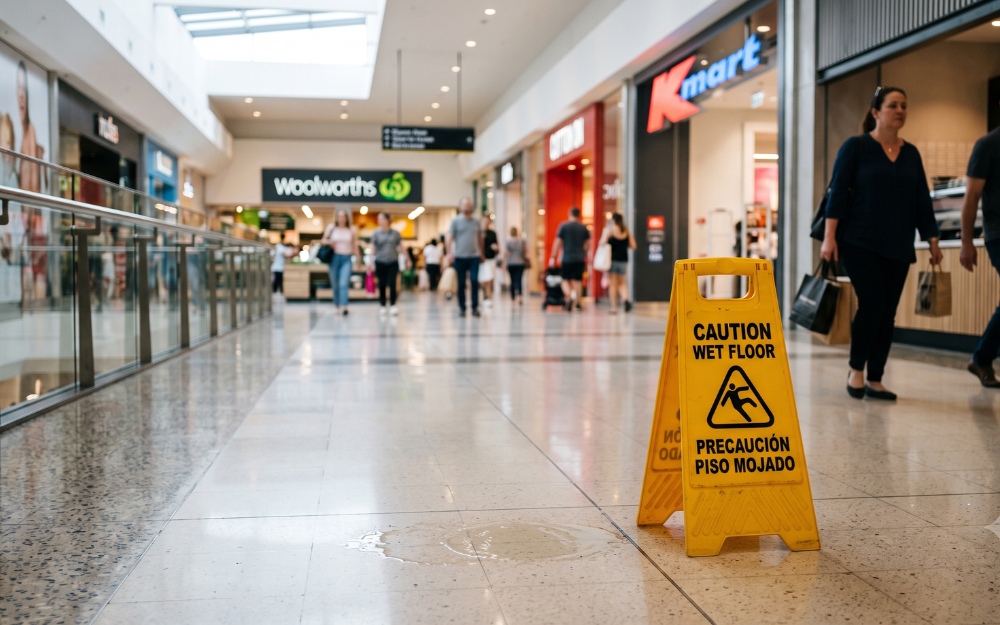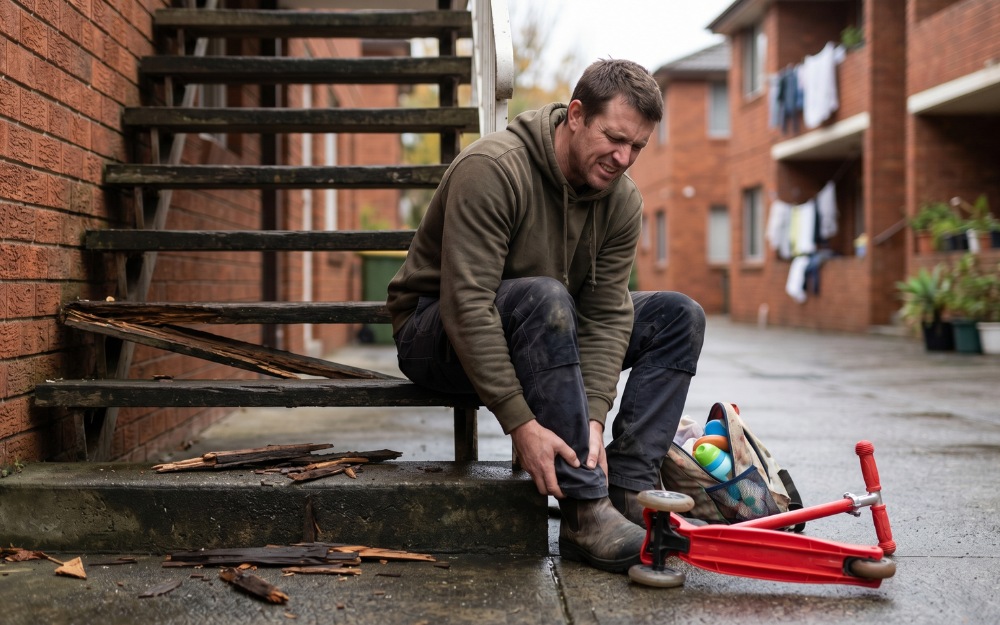
A slip on a wet floor. A fall on a broken footpath. An injury at a shopping centre, a park, a friend’s home, or a community event. These accidents happen every day — and many people who are injured in public places do not realise they may be entitled to compensation.
Public liability law in NSW has evolved significantly over recent years, and there are important practical changes that affect whether a claim succeeds, how long you have to act, and what compensation is available. This updated 2026 guide covers everything an injured person in NSW needs to know about public liability claims.
What Is a Public Liability Claim?
A public liability claim is a claim for compensation against a person or organisation that owed you a duty of care, breached that duty, and caused you injury or loss as a result. In legal terms, this is a negligence claim governed by the Civil Liability Act 2002 (NSW).
The duty of care principle means that certain people and organisations are legally obliged to take reasonable precautions to prevent harm to others. The key word is “reasonable” — the law does not require perfection, only that a reasonable person in the same position would have foreseen the risk and taken steps to address it.
Common public liability scenarios in NSW include:
- Slipping or tripping on a dangerous surface in a supermarket, shopping centre, or other retail premises;
- Falling on a council footpath or road with a known defect;
- Injury at a restaurant, café, pub, or entertainment venue;
- Injury at a swimming pool or sporting facility;
- Injury at a friend’s or family member’s home;
- Animal attacks, including dog bites.
What You Need to Prove
To succeed in a public liability claim under the Civil Liability Act 2002 (NSW), you need to establish four elements:
- Duty of care — the defendant owed you a duty of care in the circumstances;
- Breach — they failed to meet the standard of care that a reasonable person would have applied;
- Causation — their breach directly caused your injury or loss;
- Damage — you suffered harm — physical, psychological, or financial — as a result.
The Civil Liability Act sets out specific rules about when a risk is “not insignificant,” what precautions a reasonable person would have taken, and the circumstances in which obvious risks and recreational activities limit liability. These rules have created a more complex landscape than the pre-2002 common law, and understanding how they apply to your specific facts makes a significant practical difference to the viability of your claim.
Time Limits: When You Must Act
In NSW, the standard limitation period for personal injury claims — including public liability — is three years from the date of injury under the Limitation Act 1969 (NSW). If you do not commence legal proceedings within three years, you may lose the right to claim permanently.
There are some exceptions. The limitation period may run from the date of discovery for latent injuries that were not immediately apparent. Different rules apply to claims involving children, who generally have until three years after turning 18 to commence proceedings.
The practical message is: do not wait. Getting legal advice early allows a proper assessment before evidence is lost, witnesses become unavailable, and limitation periods approach.
What Compensation Is Available?
Compensation in a successful public liability claim can cover:
- Non-economic loss — pain, suffering, and loss of enjoyment of life;
- Past economic loss — wages or income lost from the date of injury;
- Future economic loss — loss of earning capacity going forward;
- Past and future medical treatment expenses;
- Past and future care and assistance expenses.
The Civil Liability Act 2002 (NSW) places a threshold on non-economic loss awards — you must generally reach a minimum level of severity before a court can award general damages.
Occupiers Liability: What Property Owners Must Do
Property owners, occupiers, and managers — including councils, businesses, landlords, and event organisers — have a positive obligation to maintain their premises in a reasonably safe condition. Evidence of how the hazard arose, how long it existed, and whether the occupier knew or should have known about it is central to most public liability claims.
Courts also assess whether the injured person’s own conduct contributed to the accident — contributory negligence — which can reduce the damages award proportionally but does not necessarily bar a successful claim.
What Has Changed: Then vs Now
Before the Civil Liability Act 2002 (NSW) was introduced, common law negligence claims were broader and more claimant-friendly. The 2002 reforms introduced significant restrictions — thresholds for non-economic loss, restrictions on damages for recreational activities and obvious risks, and limits on certain heads of damage. These reforms tightened the requirements for a successful claim and made legal advice at the outset more important, not less.
More recently, courts have maintained a generally conservative approach to occupier liability, emphasising the need for specific evidence of what hazard existed, when it arose, and whether the occupier had the opportunity to address it. Claims built on general assumptions tend to fail. Claims supported by contemporaneous evidence — photographs, incident reports, CCTV, witness statements — perform significantly better.
Practical Takeaways
- Report the accident immediately — to the premises manager, council, or venue. Ask for a copy of the incident report.
- Take photographs of the hazard and your injury as soon as possible.
- Seek medical attention promptly and document the cause of injury in your medical records.
- Collect witness details — names and contact numbers of anyone who saw the accident.
- Preserve evidence — the footwear you were wearing, any clothing, and the physical condition of the scene.
- Get legal advice before the three-year limitation period expires — ideally well before it.
- Do not assume a “no win” outcome — liability is often successfully established with the right evidence.
How Gajic Lawyers Can Help
Gajic Lawyers has been representing public liability claimants in NSW for more than 30 years. We handle everything from supermarket slips to council footpath injuries to restaurant incidents — on a No Win No Fee basis. Our technology-driven practice means your matter is managed seamlessly from initial consultation through to resolution. If you live in Western Sydney, our Cabramatta office provides in-person service with in-house interpreters in Vietnamese and Arabic.